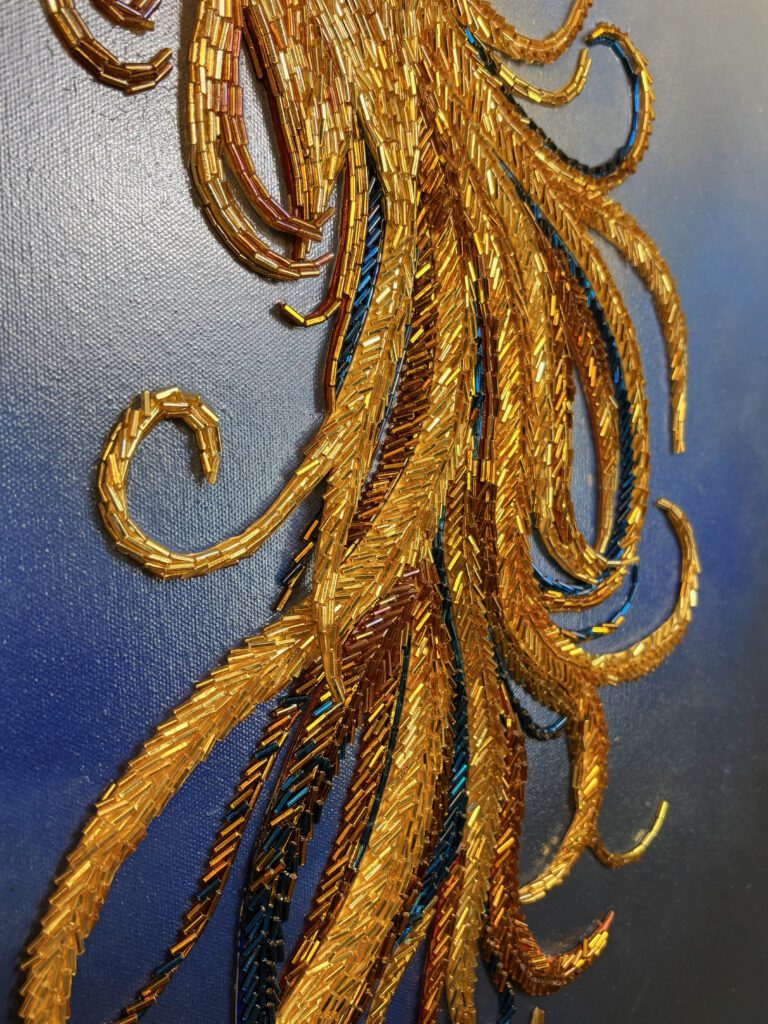
Each work begins with a surface, an idea, and a sequence of material decisions. Painting, relief, color, and bead placement develop together, building a surface in which texture and light become active parts of the composition.
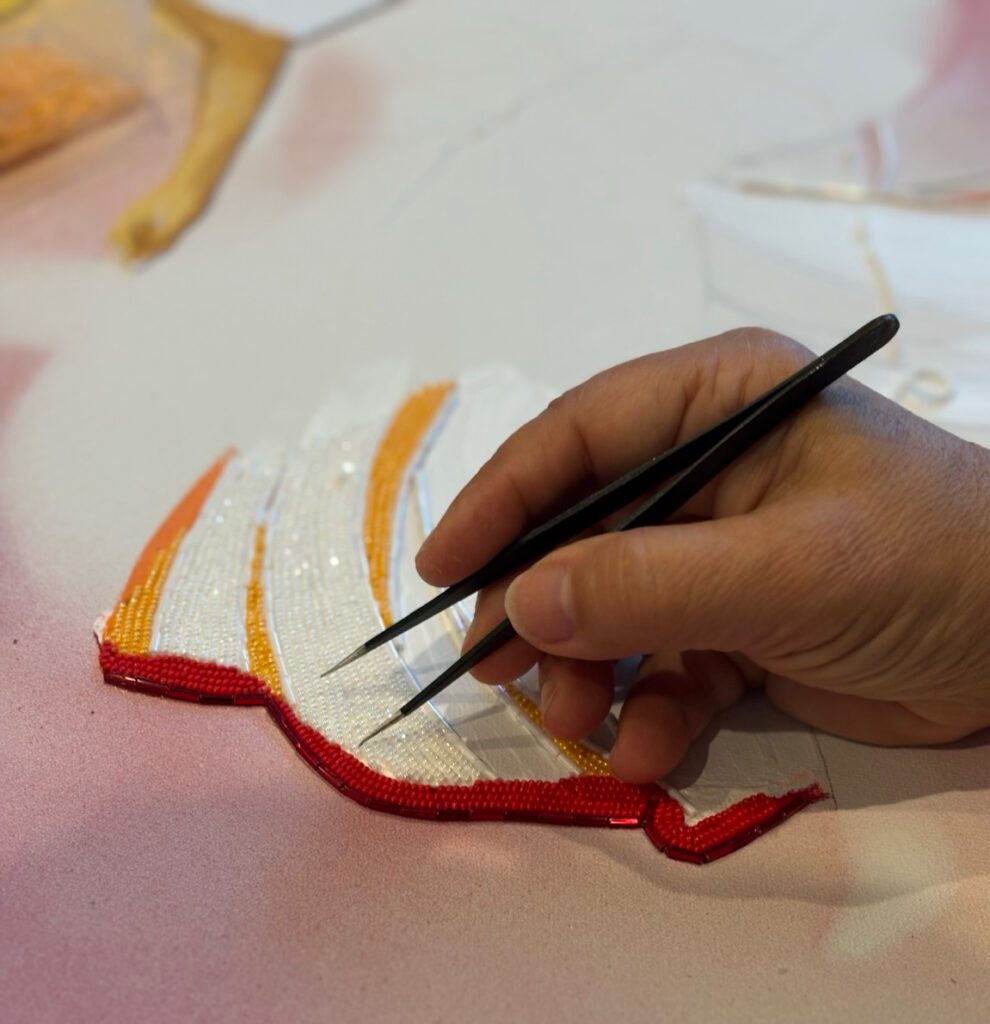
Every bead is placed individually and considered for its color, shape, finish, and orientation. Through repetition and layered construction, the work gradually develops depth, movement, and a changing relationship with light.
FROM SURFACE TO DIMENSION
Before the beadwork begins, the composition is developed through drawing and painting, establishing color, form, and movement across the surface. Depending on the work, additional layers and relief may be introduced to create depth before the final surface is built.
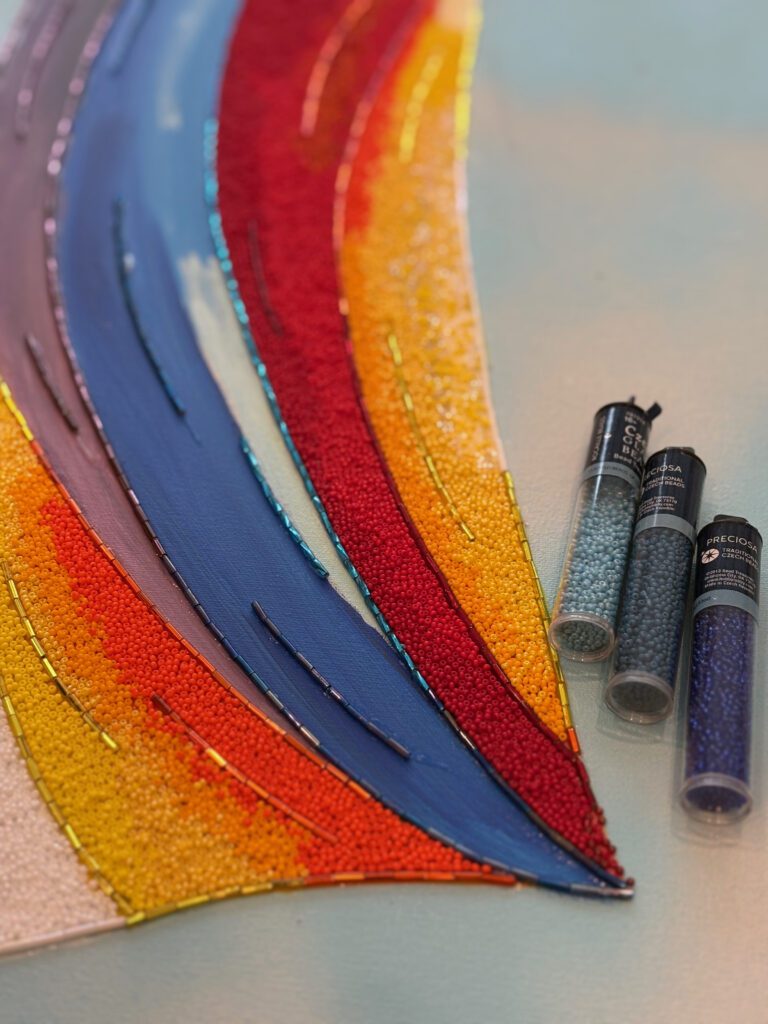
Beads are then added gradually, following and transforming the painted image beneath them. As the layers accumulate, areas of color become dimensional, lines gain direction, and the original surface begins to shift from painting into relief.
COLOR, FINISH & DIRECTION
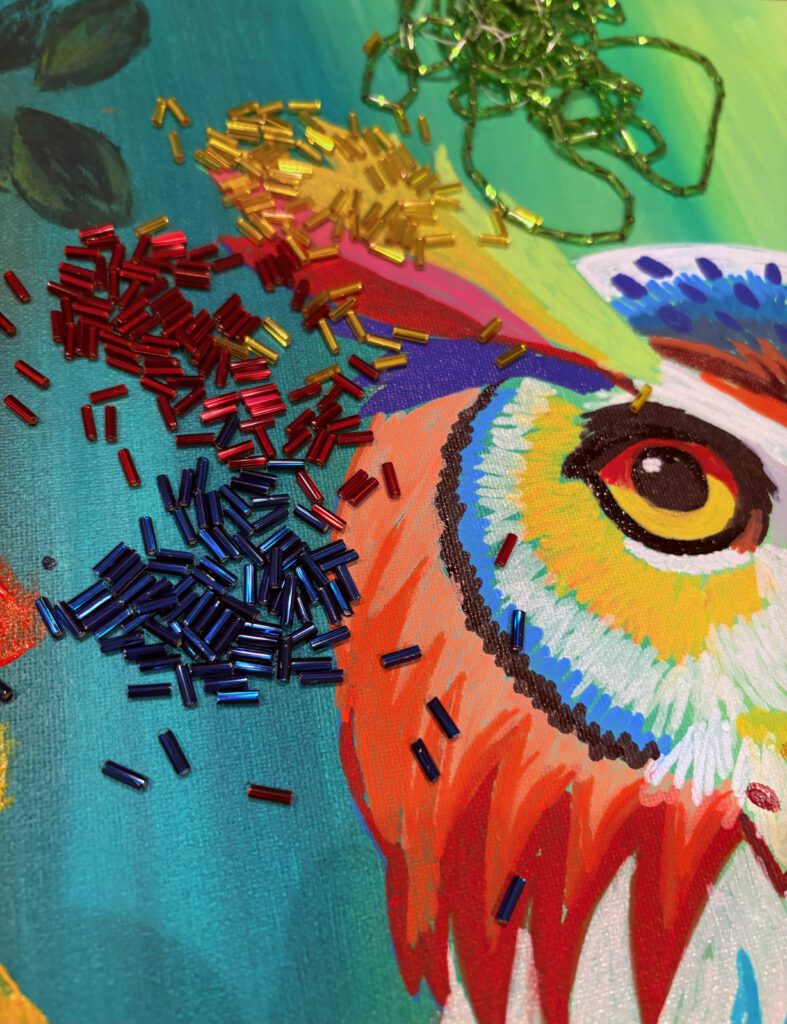
The choice of beads goes beyond color. Shape, finish, transparency, reflectivity, and direction all influence how the surface responds to light and movement.
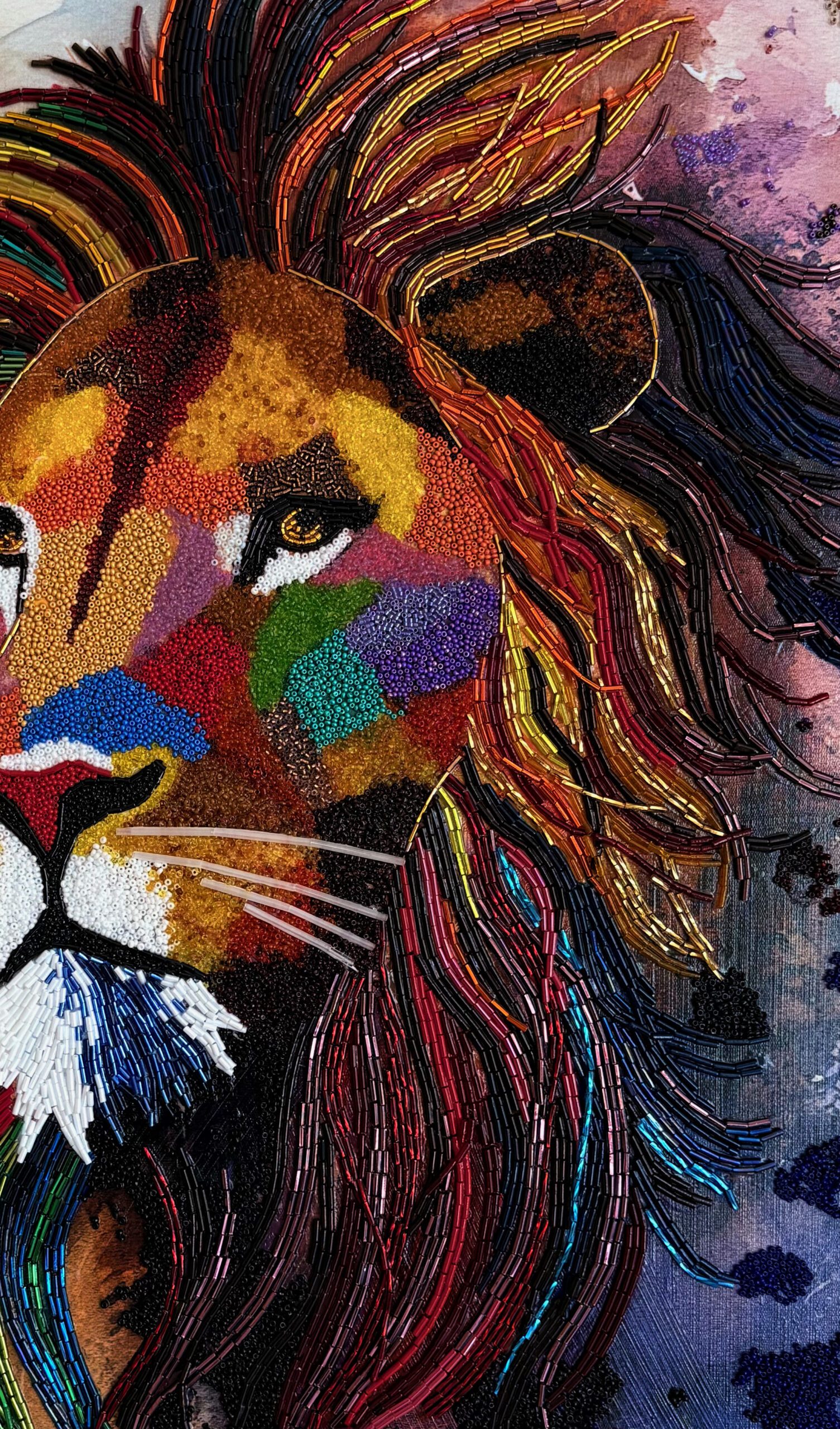
In works such as Odyssey, bead orientation follows the flow of the painted form, reinforcing direction and rhythm across the surface. Matte, transparent, metallic, and reflective finishes are combined intentionally so that light is absorbed, softened, or reflected in different ways.
LIGHT & MOVEMENT
Light is an active part of the work. As it moves across the surface, glass beads with different finishes, levels of transparency, and orientations respond in distinct ways, revealing shifts in color, texture, and depth.
The work changes with the viewer’s position. Details emerge and recede, creating a surface that is never entirely static.
tIME & REPETITION
The process is intentionally slow. A single work may develop over many hours, weeks, or even months, depending on its scale, density, and level of detail.
Repetition becomes a form of concentration. Thousands of individual placements accumulate gradually, allowing precision and intuition to work together as the image takes shape.
THE WORK CONTINUES
Each finished piece carries the trace of thousands of individuals decisions, from the first sketch and painted layers to the placement of the final bead.